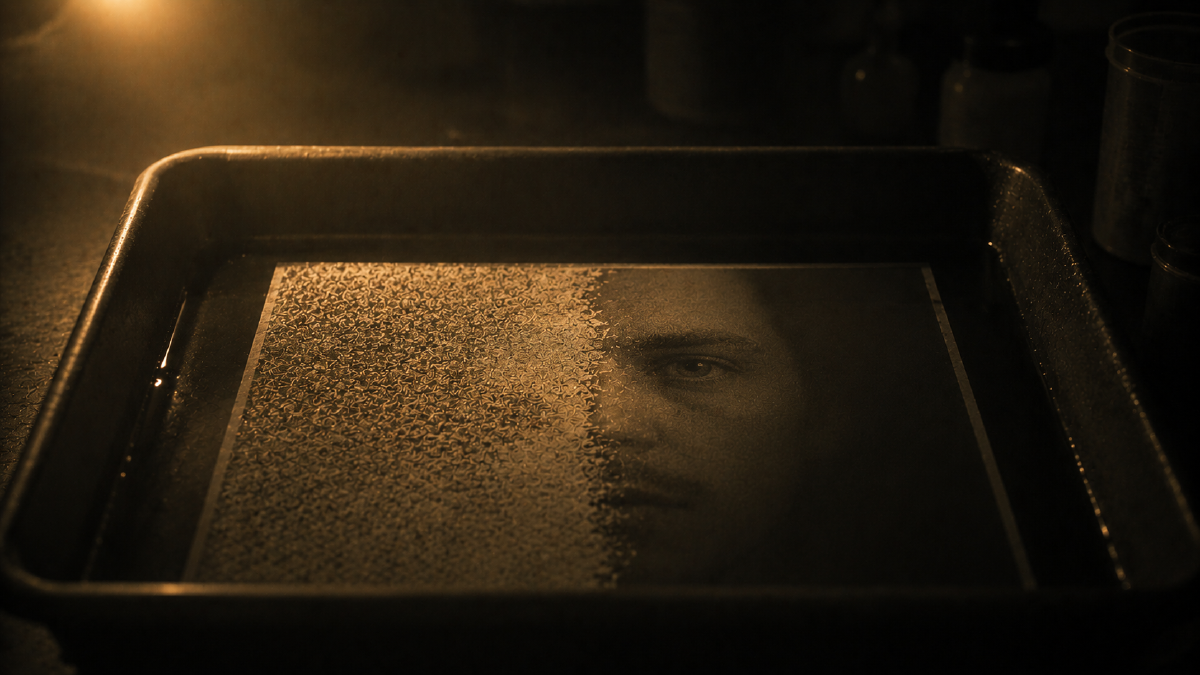
from noise to meaning — the quiet revolution in AI#
every AI generated image you’ve seen started as pure noise.
not a rough sketch. not a blurry draft. literal random noise. static. and then, step by step, something meaningful emerged from it.
that’s diffusion. and it’s behind deepfakes, synthetic media, AI generated phishing assets, and some of the most realistic fake content circulating right now.
the core idea#
diffusion models learn by studying destruction.
take a real image. gradually add noise until nothing recognisable remains. record every step of that destruction.
then train a neural network to reverse that process. given a noisy image at step T, predict what it looked like at step T-1. repeat until you’re back to something clean.
once trained — start from pure noise. run the reverse process. out comes a realistic image.
forward process — adding noise#
x_t = q(x_t | x_{t-1})
each step adds a small amount of gaussian noise. after enough steps — pure static. original image completely destroyed.
reverse process — removing noise#
x_{t-1} = p_θ(x_{t-1} | x_t)
neural network predicts the noise at each step and subtracts it. gradually the image becomes clearer. the model learns this by minimising the difference between predicted and actual noise.
L = E[||ε - ε_pred||^2]
noise schedule#
controls how much noise is added at each step. linear schedule is common — noise increases gradually and consistently across all steps.
well designed schedule = model learns to denoise effectively at every stage. poorly designed = model struggles at certain steps, output quality drops.
text to image#
generating from a prompt adds one more layer.
text encoder converts the prompt into a vector — a numerical representation of meaning. this vector conditions the denoising process at every step. the network doesn’t just remove noise — it removes noise in a direction guided by the text.
“a cat in a hat” becomes a vector. every denoising step is nudged toward that meaning. after hundreds of steps — an image that matches the description.
security implications#
diffusion models are the engine behind:
- deepfakes — realistic synthetic faces, video manipulation
- AI generated phishing assets — fake profile pictures, forged documents, synthetic screenshots
- synthetic identity fraud — faces that don’t belong to real people used in KYC bypass attempts
- disinformation — realistic fake images of events that never happened
as a SOC analyst or security professional — understanding this matters for:
- evaluating authenticity of images in investigations
- understanding the capability level of social engineering attacks
- building awareness around synthetic media as an attack vector
detection tools exist — but they’re in a constant arms race with generation quality. the models keep getting better.
and that’s the series.#
twelve posts. from AI vs ML all the way to diffusion models. we started with the big picture and ended with the technology generating fake realities.
if something clicked — share it. if something didn’t make sense — drop a comment. still figuring this out too, one post at a time.
thanks for reading. genuinely.
took ai help to clean up typos. my brain works faster than my fingers. xd
back to series index — still figuring out AI, one post at a time