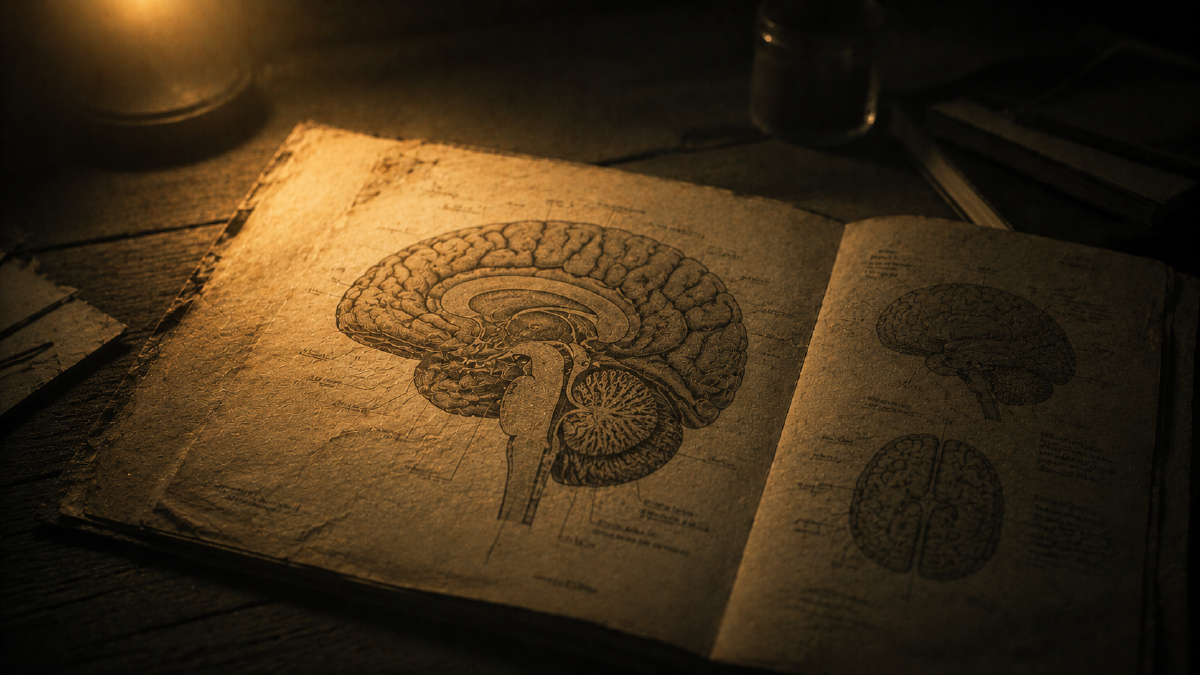
the brain analogy everyone uses — here’s what it actually means#
deep learning is the reason AI got dramatically better. not magic. architecture.
same data. same computers. different structure. suddenly image recognition works. speech recognition works. threat detection gets dramatically more accurate. the architecture changed everything.
let’s look inside.
the perceptron — where it started#
smallest unit of a neural network. one decision maker.
takes inputs. multiplies each by a weight. adds a bias. passes through an activation function. produces an output.
y = f(w1x1 + w2x2 + ... + wnxn + b)
think of weights as importance. bias as a baseline. activation function as the decision gate.
limitation — a single perceptron can only draw a straight line. complex problems need curves. that’s where networks come in.
neural networks — layers of decisions#
stack perceptrons into layers. connect them. now you have a neural network.
three layers:
- input layer — receives raw data. one neuron per feature.
- hidden layers — where learning happens. each layer extracts increasingly complex patterns.
- output layer — final decision. one neuron for binary classification. one per class for multi-class.
more hidden layers = deeper network = deep learning.
each neuron in a hidden layer:
- receives inputs from every neuron in the previous layer
- computes weighted sum plus bias
- applies activation function
- passes output forward
activation functions — why they matter#
without activation functions the network is just a linear equation. useless for complex problems.
four common ones:
- sigmoid — squashes output between 0 and 1. good for probability outputs.
- ReLU — returns 0 for negative inputs, input value for positive. fast, widely used.
- tanh — squashes between -1 and 1. centered at zero.
- softmax — converts outputs to probability distribution. used in final layer for multi-class problems.
ReLU is the default choice for most hidden layers today.
how networks learn — backpropagation#
forward pass — data flows through the network. prediction is made.
loss is calculated — how wrong was the prediction?
backward pass — error signal flows back through the network. gradients calculated at each layer using chain rule.
weights updated using gradient descent — small steps in the direction that reduces error.
repeat thousands of times. network improves.
why this matters in security#
every “AI-powered” behavioural detection engine has this underneath. the network learned what malicious behaviour looks like from millions of labelled examples. it’s not rules. it’s weighted connections adjusted through millions of iterations.
understanding this helps you ask the right question — not “does the AI say malicious?” but “what did it learn from, and is that training data still relevant to today’s threats?”
next up — CNNs and RNNs. how deep learning handles images and sequences. malware classification and log analysis territory.
when a vendor says “deep learning model” in their pitch — what question do you wish you could ask them?
took ai help to clean up typos. my brain works faster than my fingers. xd
next up: AI Series #9 — “how AI sees images and reads sequences — two tools, one post” back to series index